
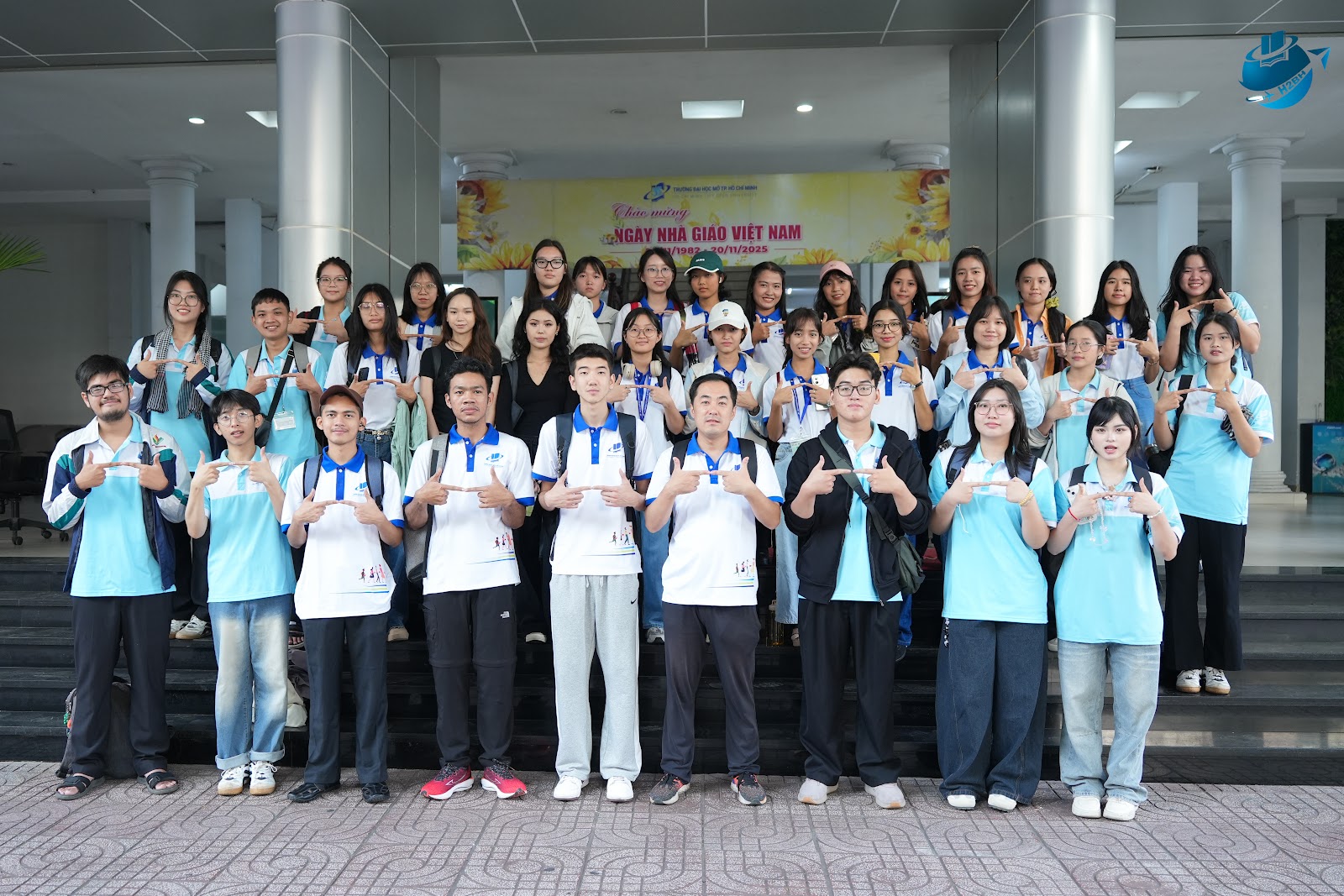
On November 16, 2025, Ho Chi Minh City Open University organized a field trip to the Cu Chi Tunnels – Ben Duoc Historical Relic Area as part of the “Welcoming International Students” series with twenty-five international students from Myanmar, Mongolia, China, Cambodia, Laos, and Fiji participated. This activity allowed students to explore an important part of Vietnamese history and gain a deeper understanding of the nation’s resilient tradition of struggle. It also offered an opportunity to experience local culture and cuisine closely connected to the community’s daily lives.
The Journey to Discover the “Iron Land and Bronze Citadel”
The tour began in an atmosphere of excitement among international learners. With the support of the OU Help To Be Helped Club, students expressed curiosity and anticipation as they prepared to explore an iconic historical site symbolising Vietnam’s heroic resistance and enduring spirit.
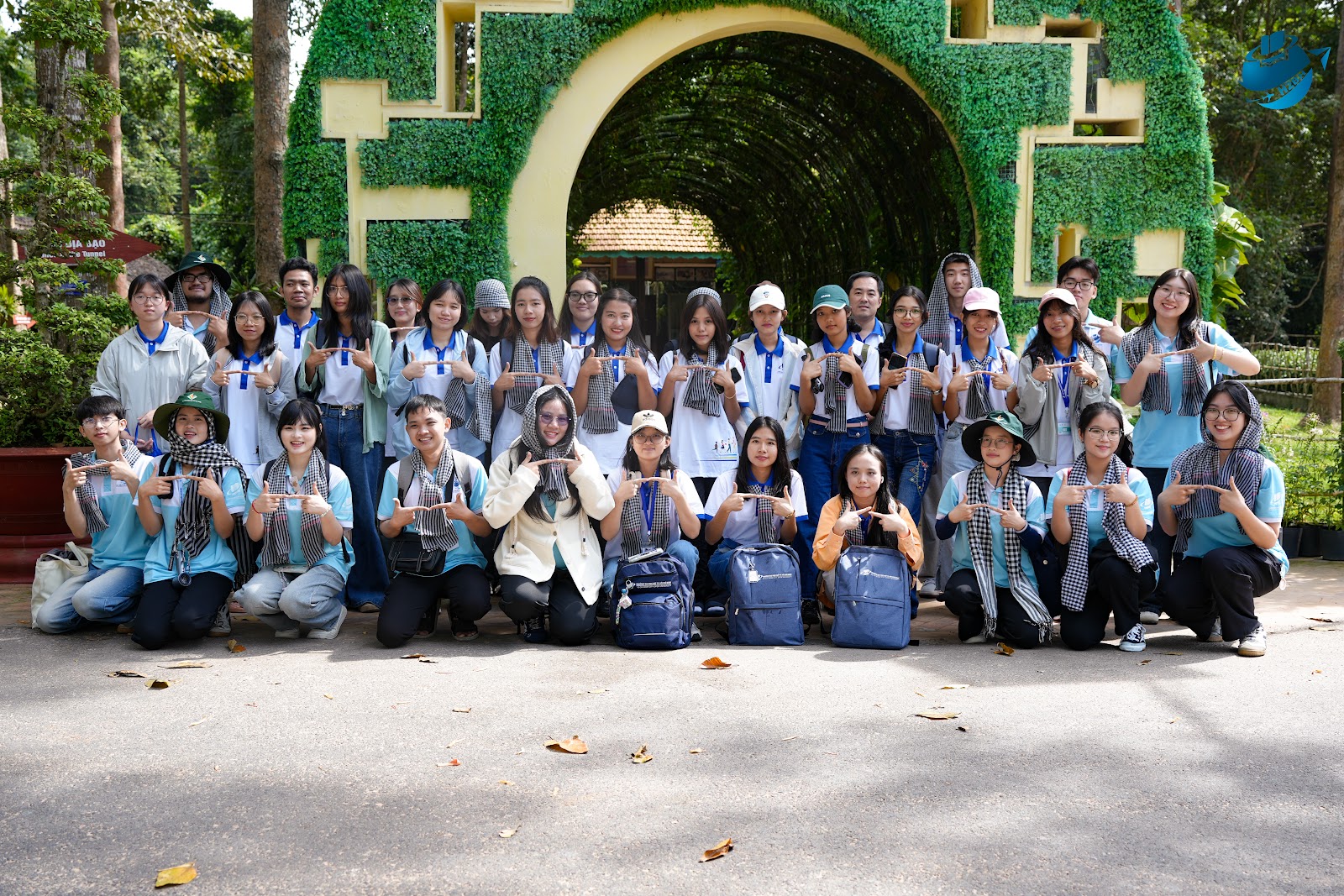
The Cu Chi Tunnels Historical Relic Area, located in Phu My Hung Commune, northwest of Ho Chi Minh City, is a unique military structure with over 250 kilometers of tunnels built during the resistance period. The tunnels symbolize resilience, independence and national unity. Today, they attract both domestic and international tourists; serve as an educational site for younger generations, particularly international learners interested in Vietnamese history and culture.
Unforgettable Practical Experiences
At the Cu Chi Tunnels site, international learners watched a documentary about the local people’s resilient guerrilla warfare. The film provided them with insight into the courageous guerrilla resistance of the Cu Chi community, illustrating both the hardships of wartime life and the strategic importance of the tunnel network, left many learners deeply impressed by the ingenuity, resilience, and steadfast spirit of the Vietnamese people during decades of resistance.
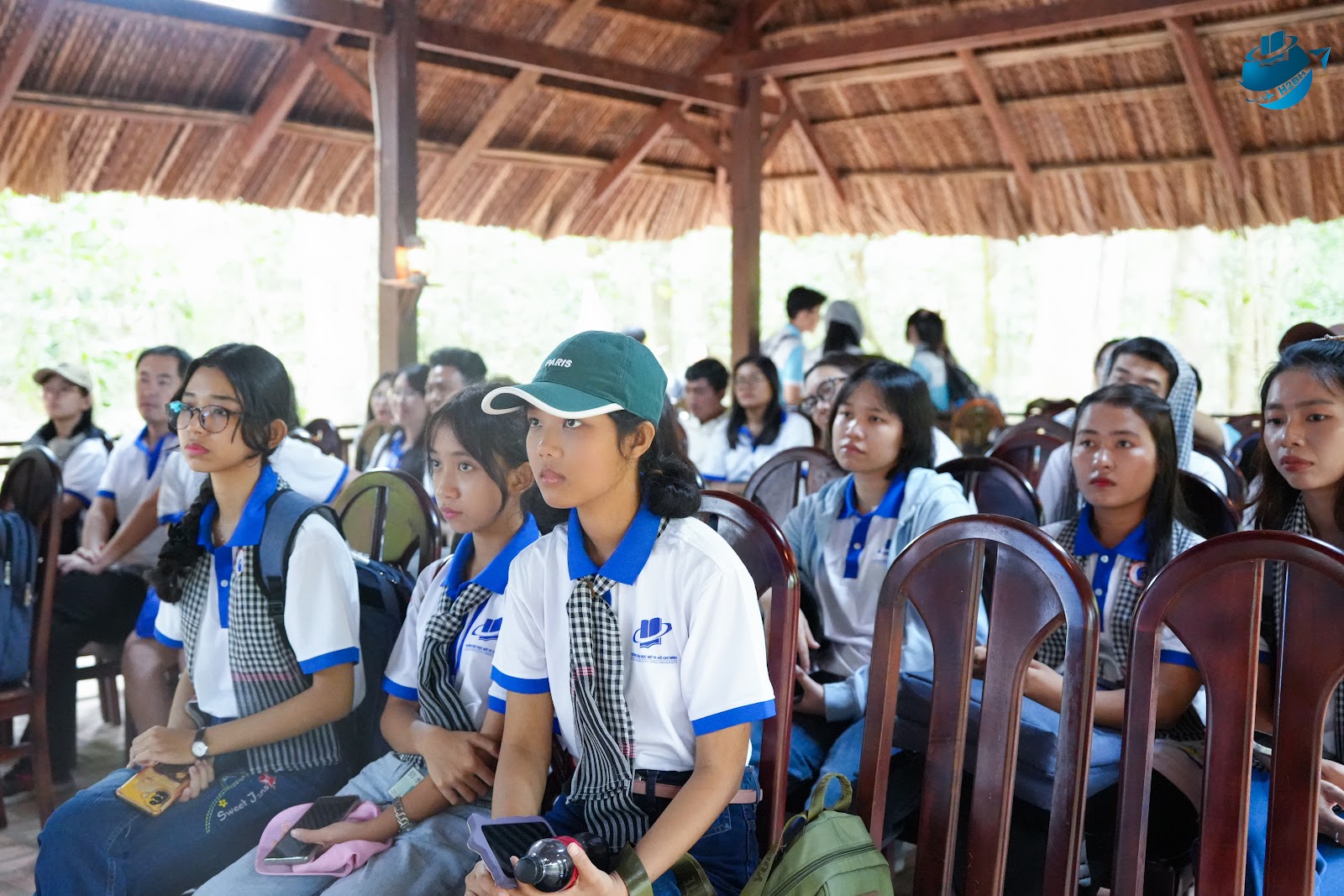
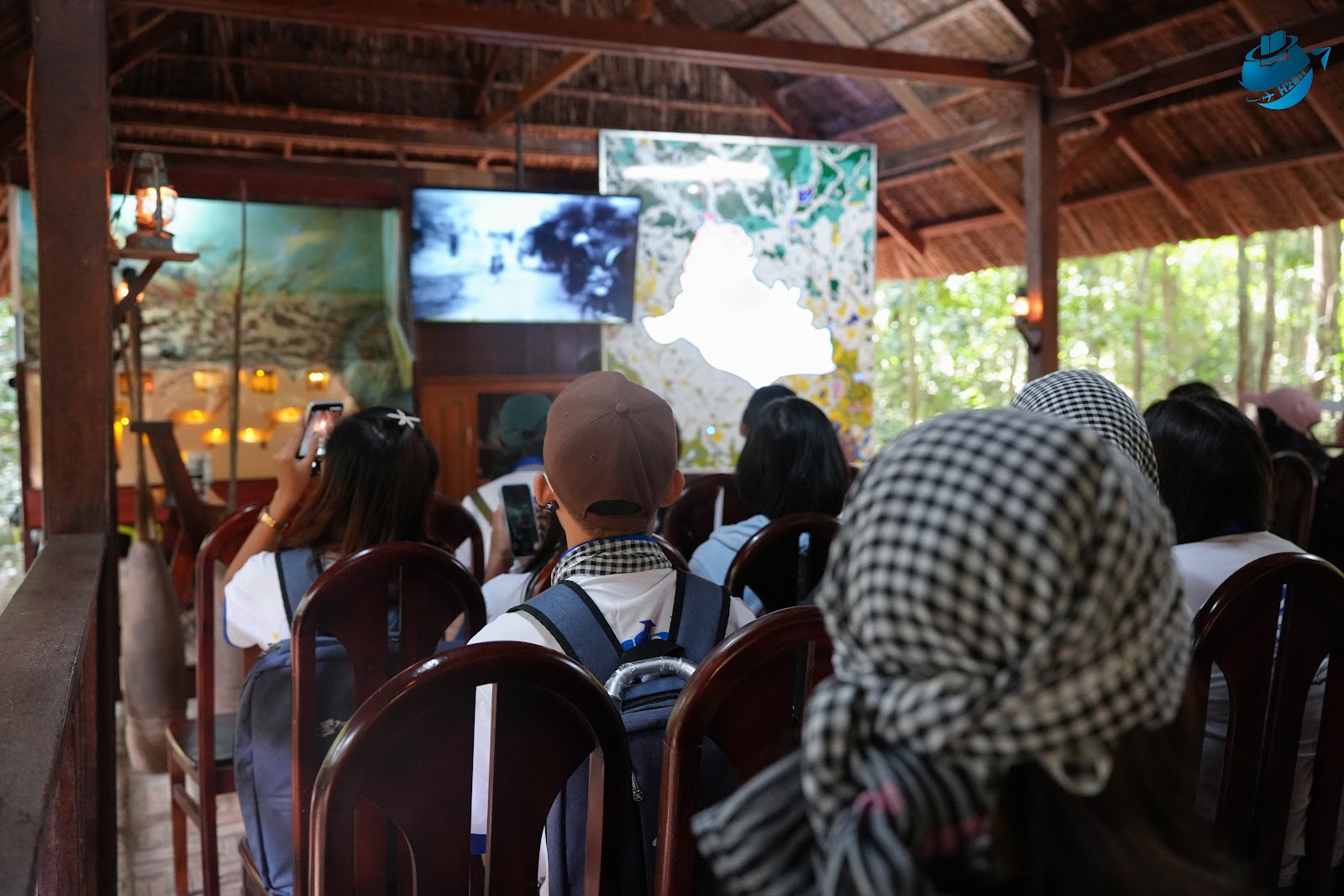
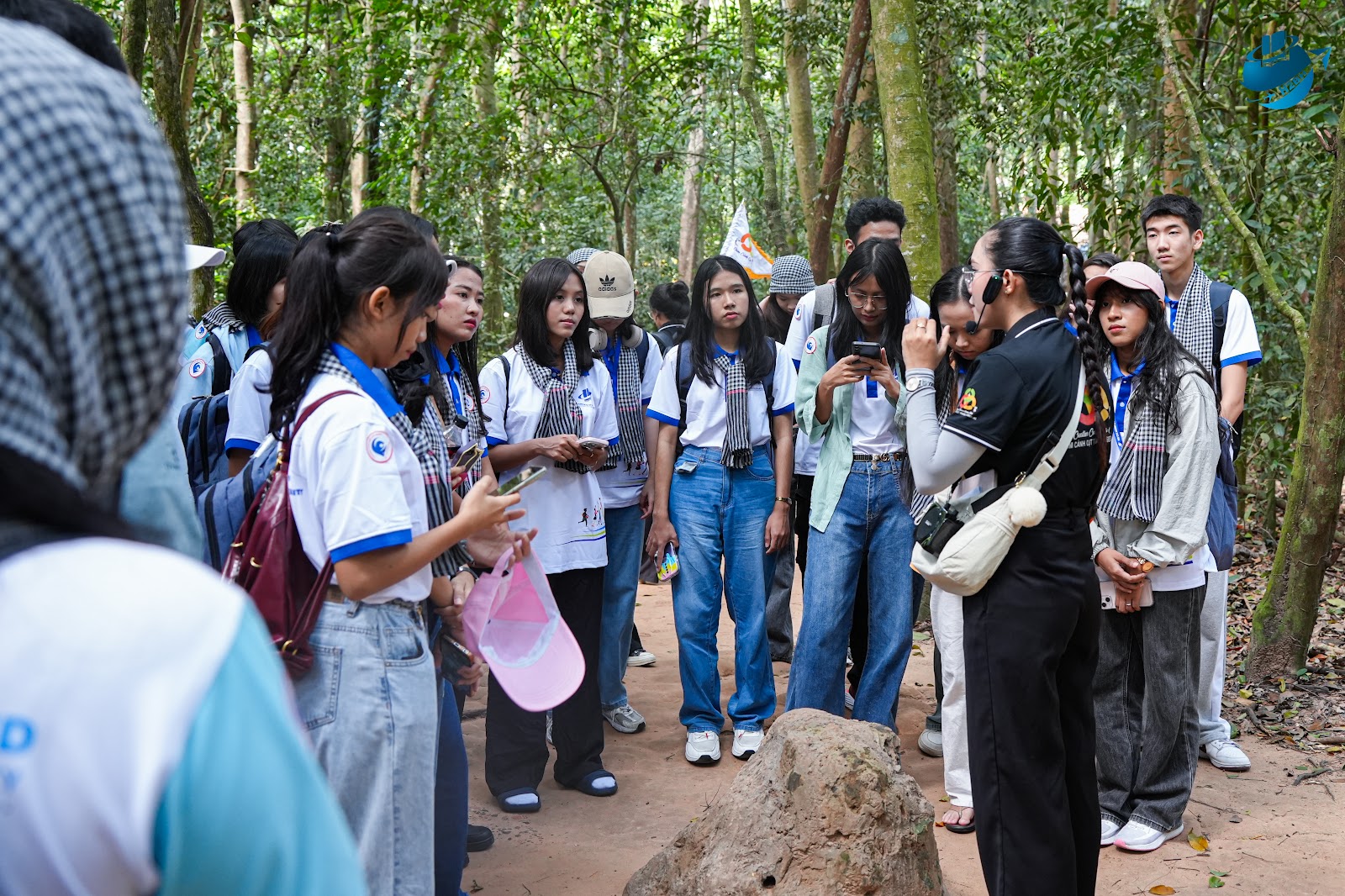
Following the visit, the group visited the exhibition area, which displayed photos, artifacts, and reconstructed models depicting life in the tunnels. Learners received detailed explanations of Vietnamese guerrilla warfare, including the Hoang Cam stove system, kitchens, meeting rooms, underground field hospitals, traps and tunnel entrances camouflaged with vegetation. Through the exhibition tour, international learners gained historical knowledge and a deeper understanding of the local people’s ingenuity and resilience during wartime.
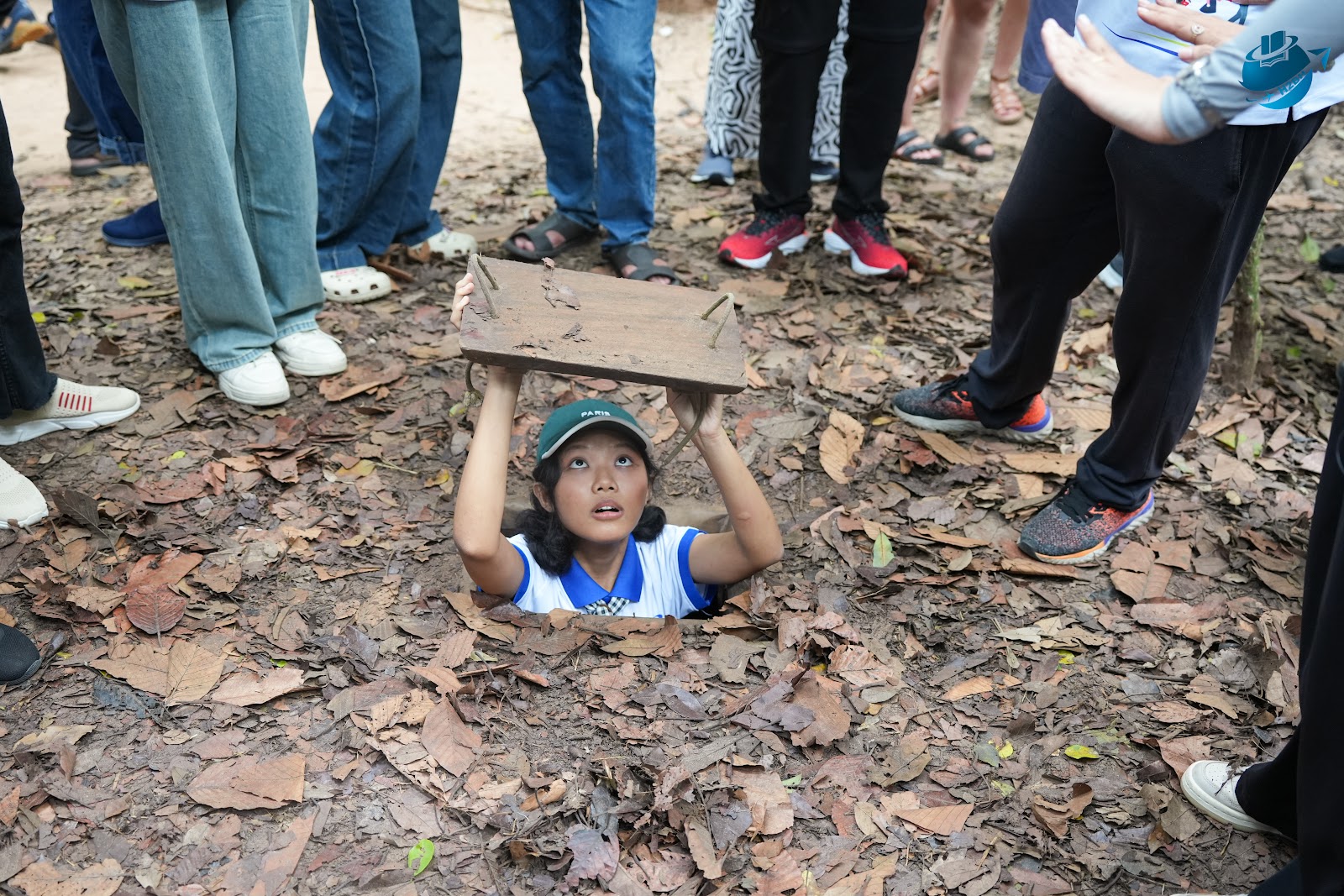
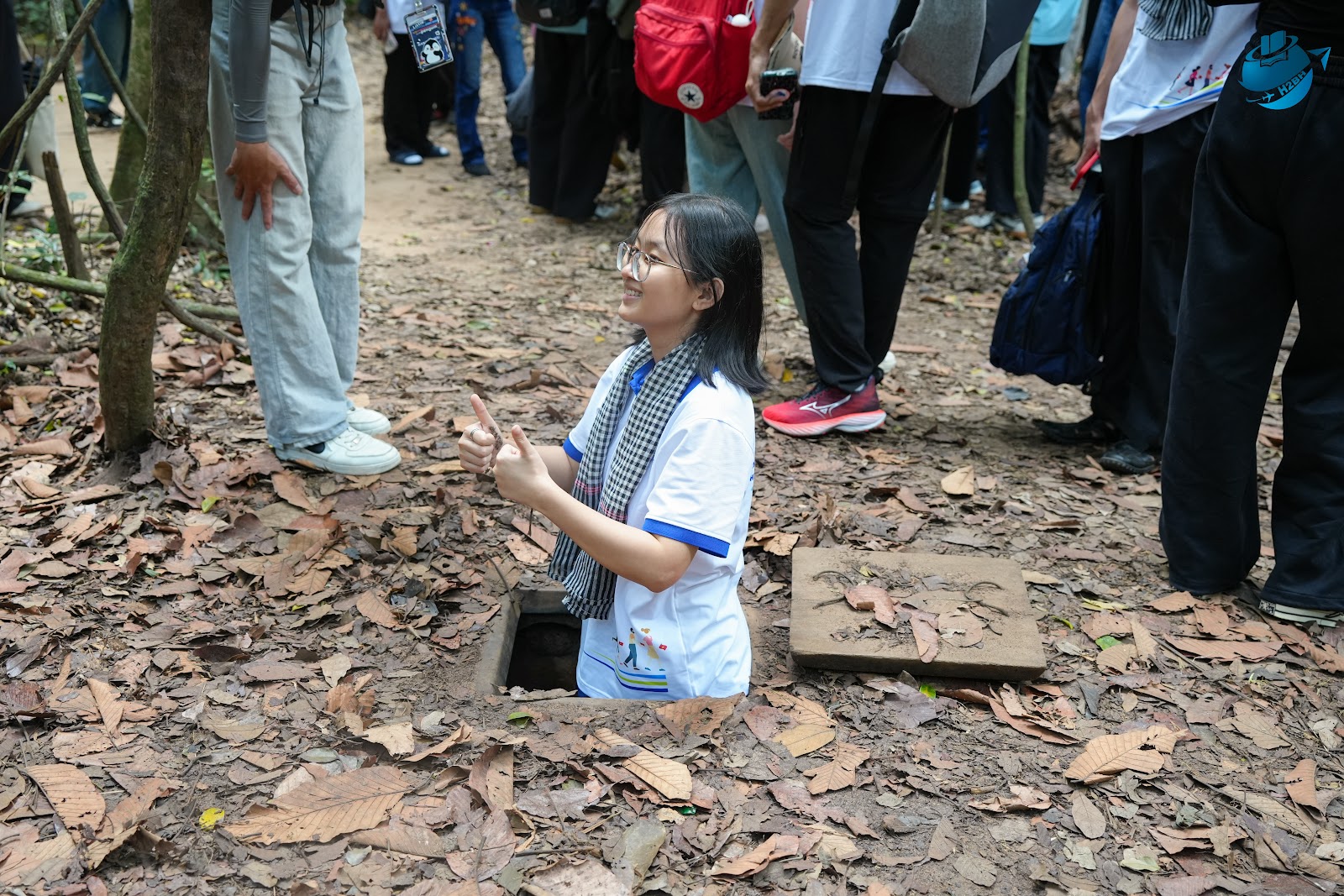
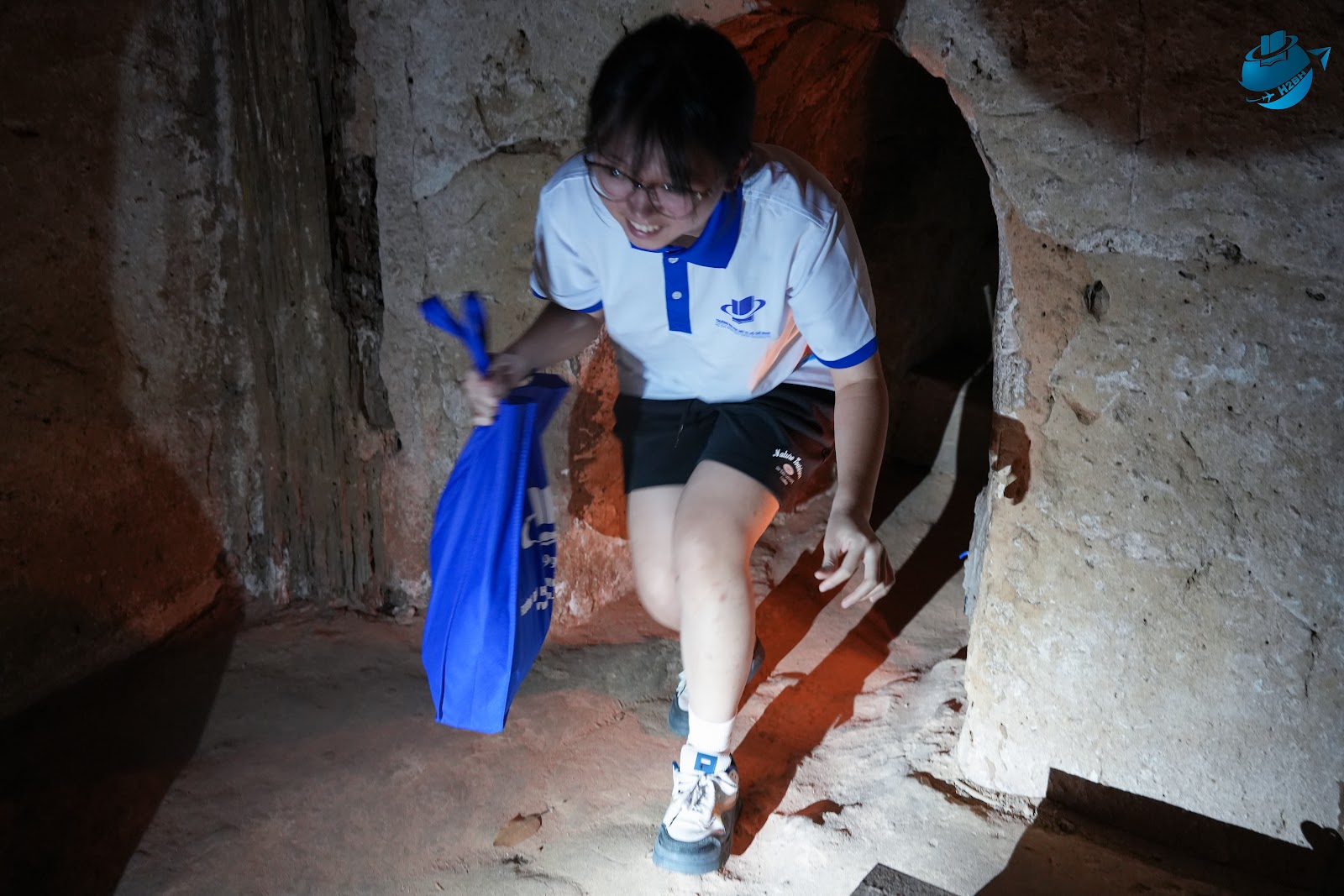
The tunnel-crawling experience left the most lasting impression on international learners. By entering the tunnel system from its narrow entrances, they gained firsthand insight into “life underground”. The heat, confined space, and darkness helped learners better understand the harsh living and fighting conditions endured by the Vietnamese people during wartime. Sharing his experience, Thet Phoo Zune, a learner from Myanmar, said: “The activity that impressed me the most during the trip was visiting and crawling through the tunnels. It made me deeply admire the bravery and resilient spirit of the Vietnamese people.”
International learners also enjoyed local culinary specialties throughout the journey. Boiled tapioca with sesame salt (Khoai mì muối mè) – a familiar rustic dish of the Cu Chi people. The tapioca is boiled just right and dipped in a mixture of sesame, crushed roasted peanuts, sugar, and salt, carrying the flavor of the past and fulfilled with the love of the land. This is not only a local specialty for tourists to enjoy rustic and authentic flavors, but also a symbolic dish of the resilience and indomitability of the Cu Chi people.
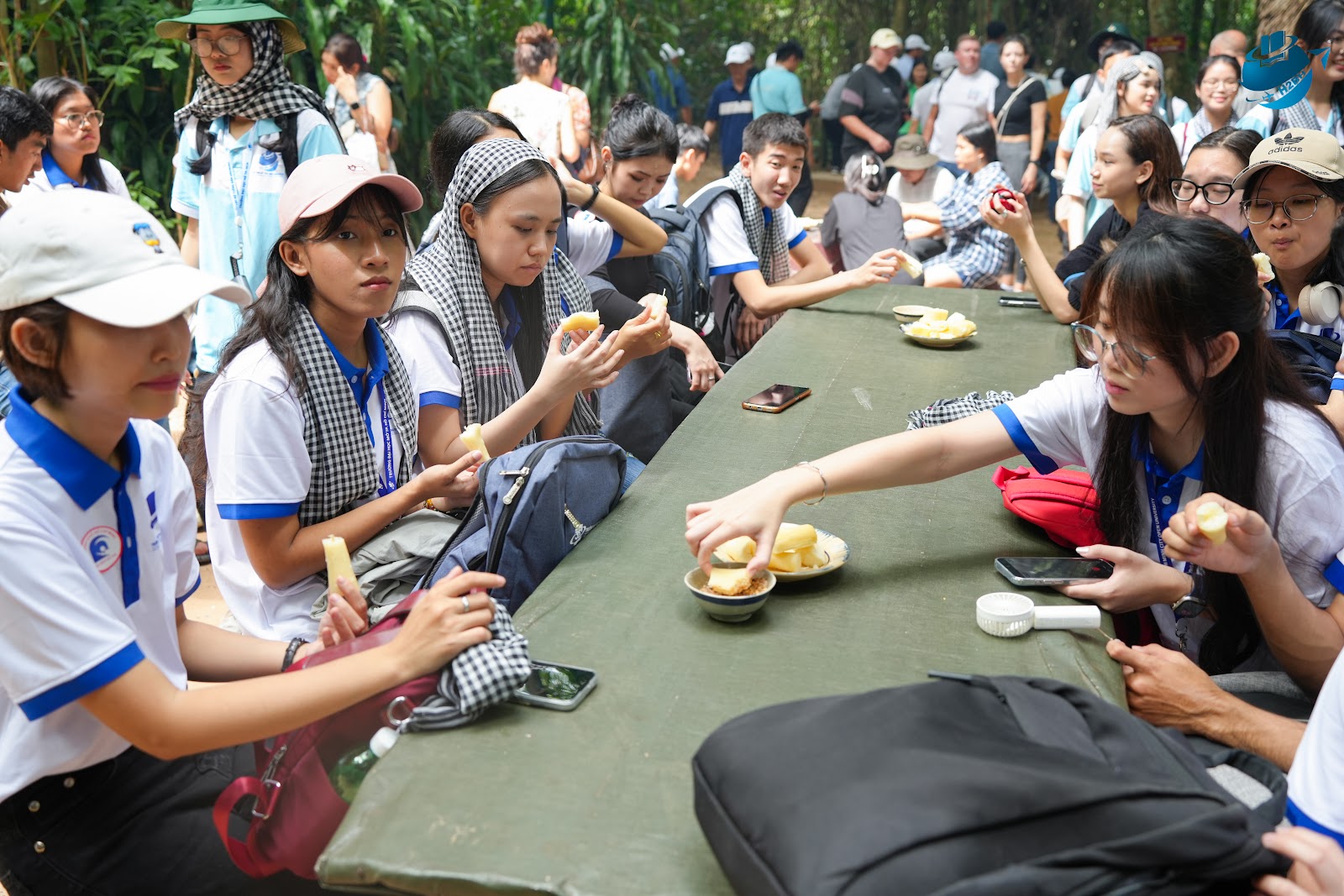
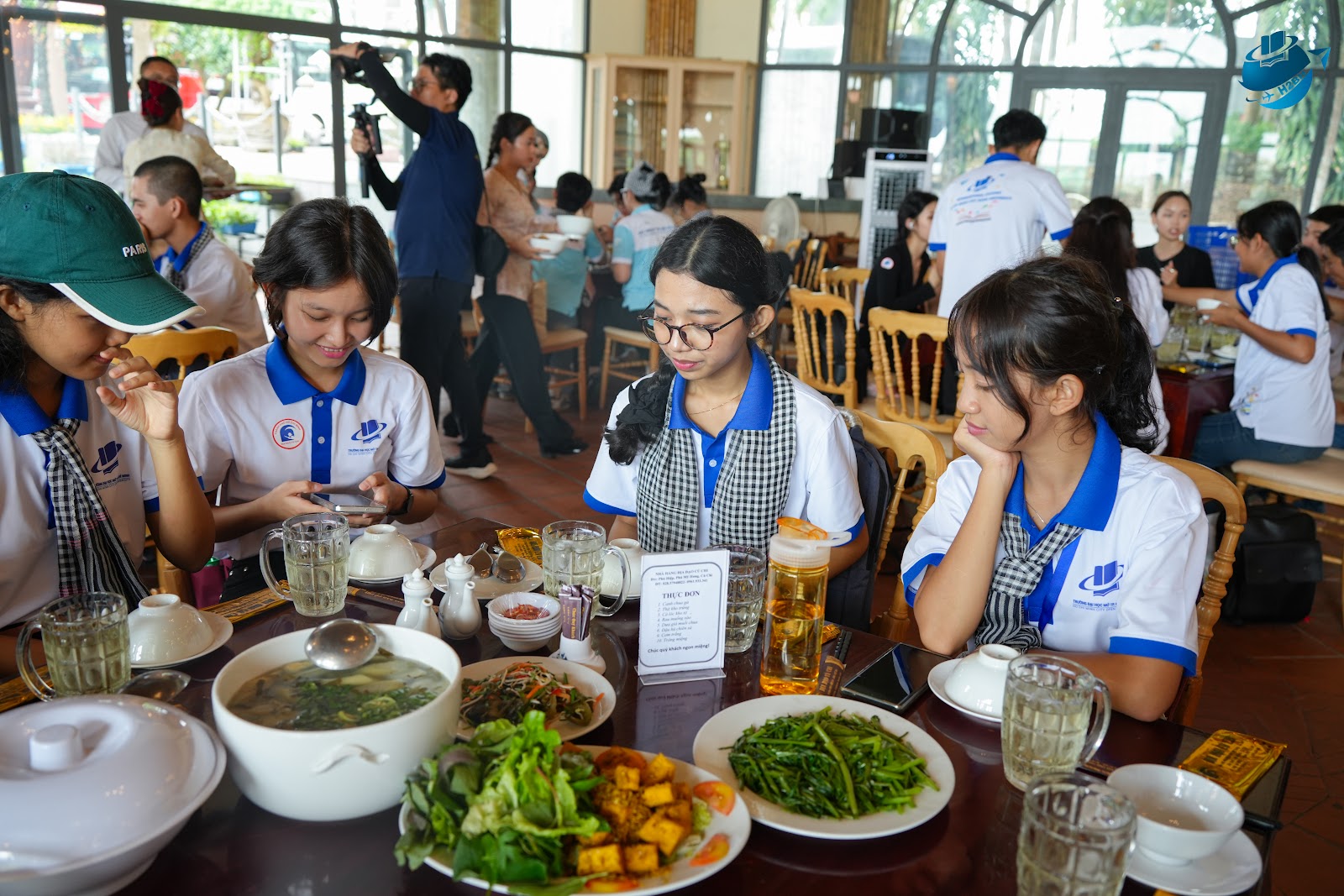
Lim MeyMey from Cambodia reflected on the trip: “I felt excited to participate and had wonderful experiences during the trip. From enjoying the local specialty of tapioca with sesame salt to practical activities like crawling through tunnels and making rice paper. The tour left me with unforgettable memories, and I look forward to upcoming trips.”
Visiting and Experiencing Rice Paper Making at Phu Hoa Dong Craft Village
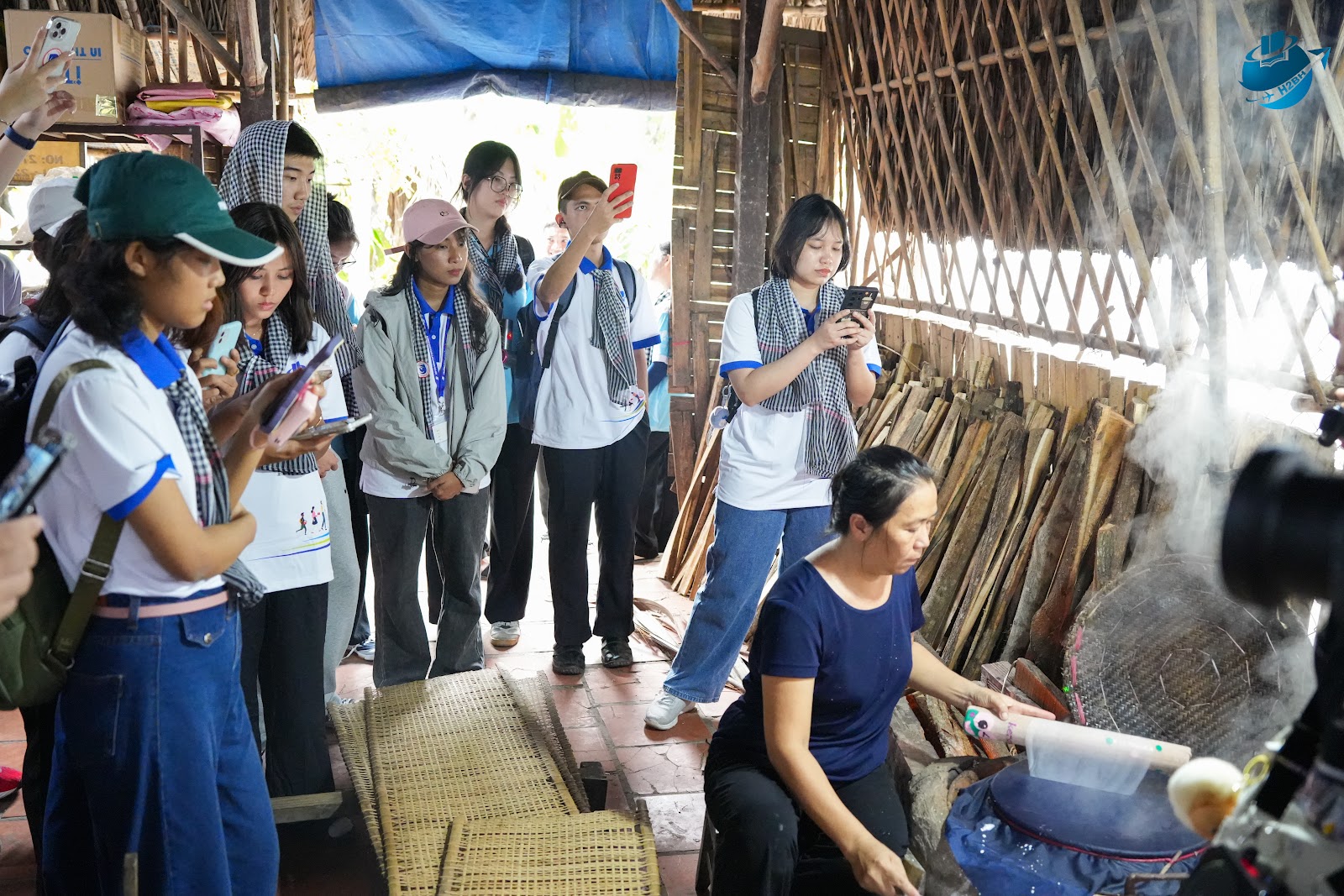
After lunch, the group of international learners continued to Phu Hoa Dong Rice Paper Craft Village – a long-standing traditional craft village of Ho Chi Minh City and a unique cultural feature of the Cu Chi region. This place has long been famous for its soft, fragrant rice paper products, carrying a rustic yet unforgettable flavor, contributing to the unique local culinary identity.

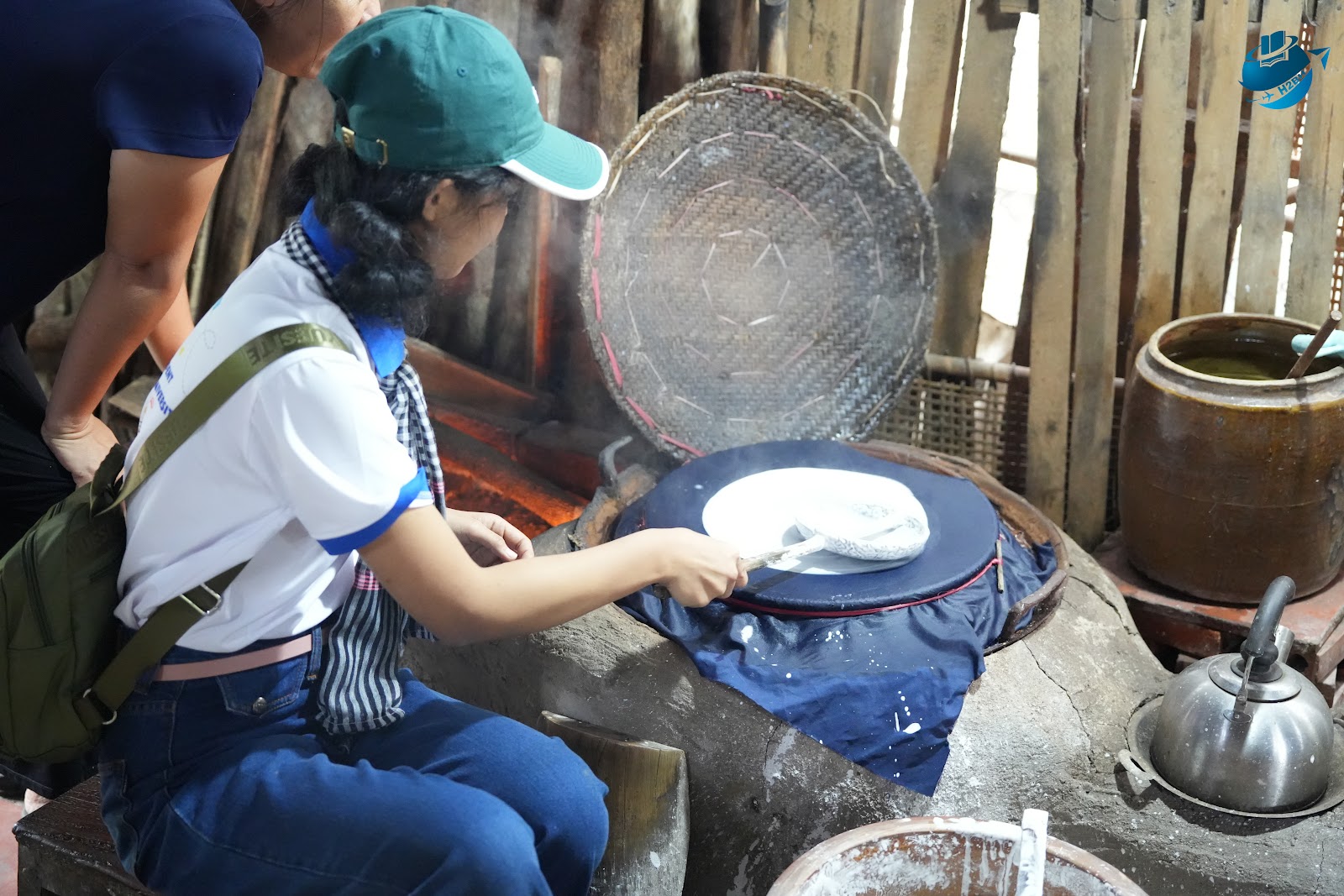
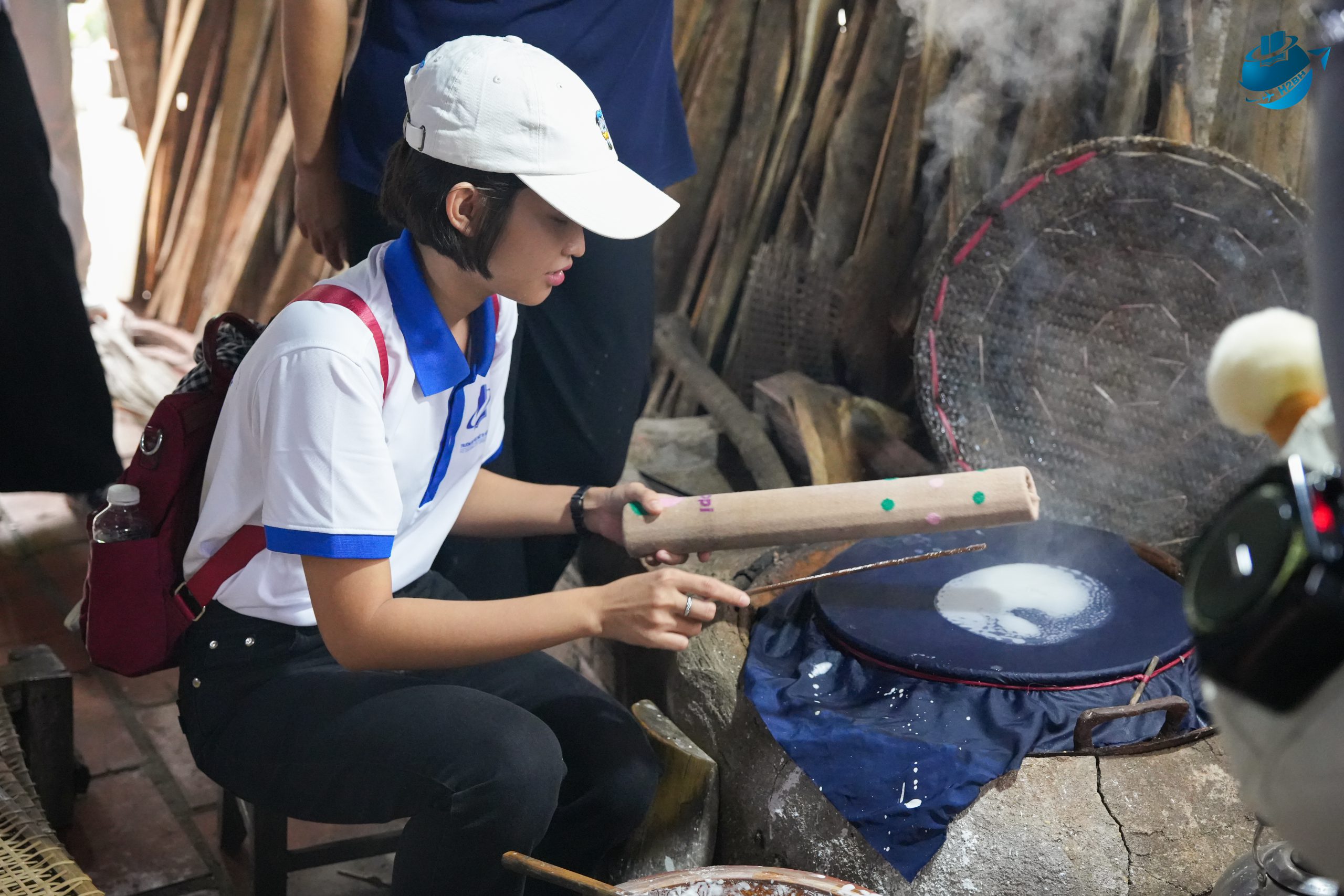
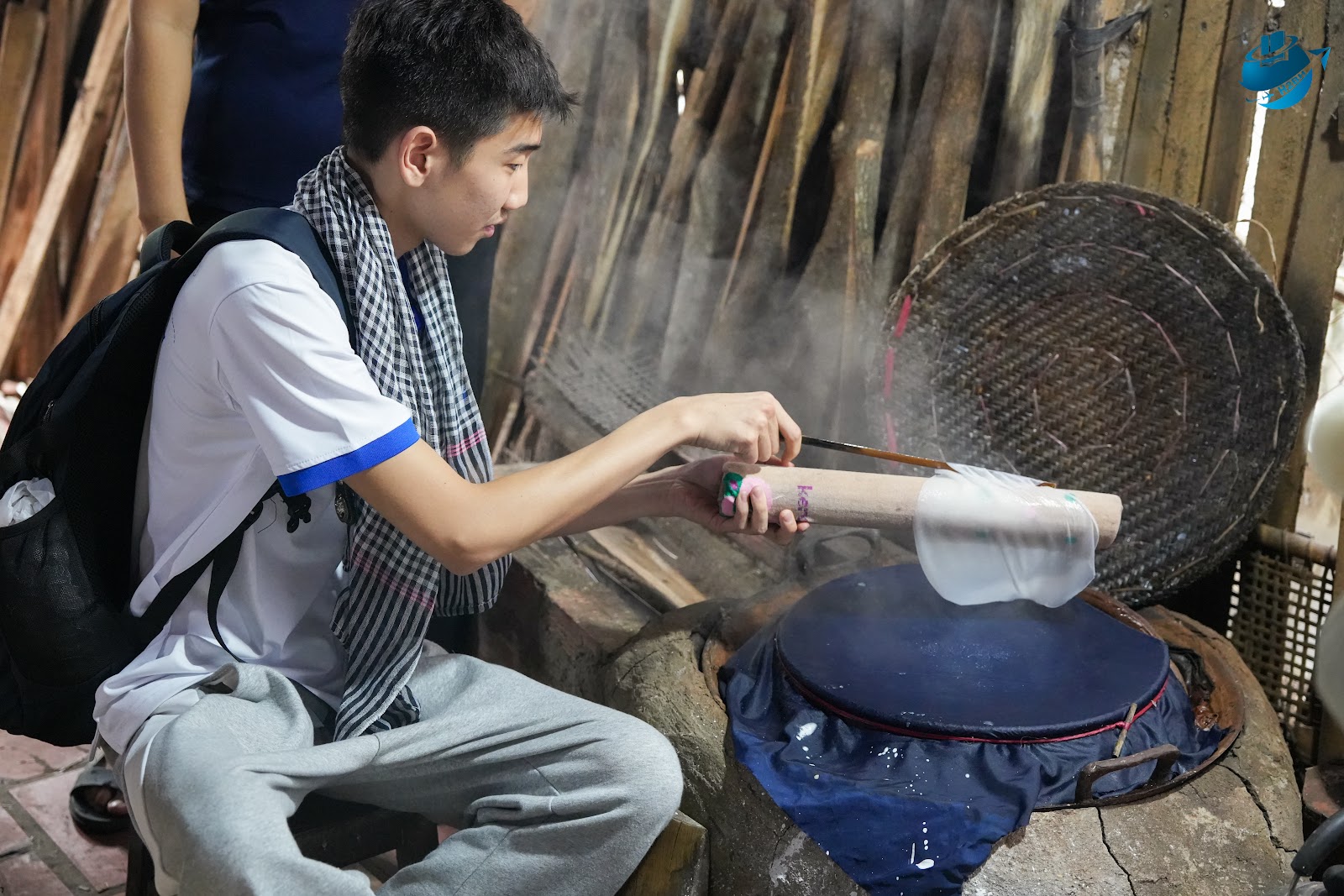
With guidance from tour guides and local artisans, the group observed the traditional rice paper-making process, including mixing dough, spreading sheets, and drying. Many international learners expressed great excitement as they witnessed for the first time with the traditional handcrafted rice paper-making process – an activity deeply rooted in Vietnamese cultural identity. They also had the opportunity to directly experience spreading rice paper under the close and enthusiastic guidance of local artisans.
A Colorful Journey Full of Memories
Through the journey of exploring history and culture in Cu Chi, international learners not only gained new knowledge but also gained a deeper understanding of the values, lifestyle, and spirit of the Vietnamese people.
This activity once again underscores Ho Chi Minh City Open University’s commitment to fostering a learning environment not only internationally oriented, dynamic but also enriched with hands-on experiences for students. In the near future, the University – particularly the OU Help To Be Helped Club will continue to expand and enhance practical cultural and educational initiatives, providing comprehensive support to help international learners integrate smoothly into life and study in Viet Nam.